MCQ on Abscisic Acid

MCQ on Abscisic Acid (ABA)

Abscisic acid (ABA) is a plant hormone nicknamed the “stress hormone.” It helps plants cope with drought, cold, and other threats by triggering responses like closing pores to conserve water and promoting seed dormancy. This is an MCQ on Abscisic Acid Structure and Functions. You may also like: $. Plant […]

Continue Reading
plant hormone mcq

MCQ on Plant Hormones

Plant Hormone MCQ: Plant hormones, also known as phytohormones, are chemical substances that regulate various physiological processes in plants. They include auxins, gibberellins, cytokinins, ethylene, and abscisic acid. These hormones influence growth, development, flowering, fruiting, and responses to environmental stimuli. This is an MCQ on Plant Hormones. You may also […]

Continue Reading
Proton Gradient and ATP Synthesis

MCQ on Proton Gradient and ATP Synthesis

A proton gradient is a difference in proton concentration across a membrane, created by the electron transport chain. ATP synthesis occurs when protons flow back across the membrane through ATP synthase, using the energy from this gradient to convert ADP and inorganic phosphate into ATP. This article is on Proton […]

Continue Reading
MCQ on Chemiosmotic Coupling

MCQ on Chemiosmotic Coupling Mechanism of ATP Synthesis

Chemiosmotic coupling is the mechanism by which ATP is synthesized in mitochondria and chloroplasts. It involves the movement of protons across a membrane, creating a proton gradient. The energy from this gradient drives ATP synthase to convert ADP and inorganic phosphate into ATP. This is an MCQ on Chemiosmotic Coupling […]

Continue Reading
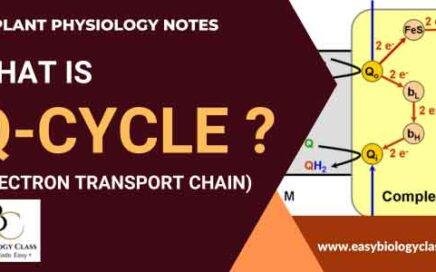
mcq on q cycle

MCQ on Q Cycle

The Q cycle is a mechanism in the electron transport chain’s complex III (cytochrome bc1 complex) that transfers electrons from ubiquinol (QH2) to cytochrome c. It involves proton pumping from the mitochondrial matrix to the intermembrane space, contributing to the proton gradient for ATP synthesis. This is an MCQ on […]

Continue Reading