
Plant Disease Forecasting
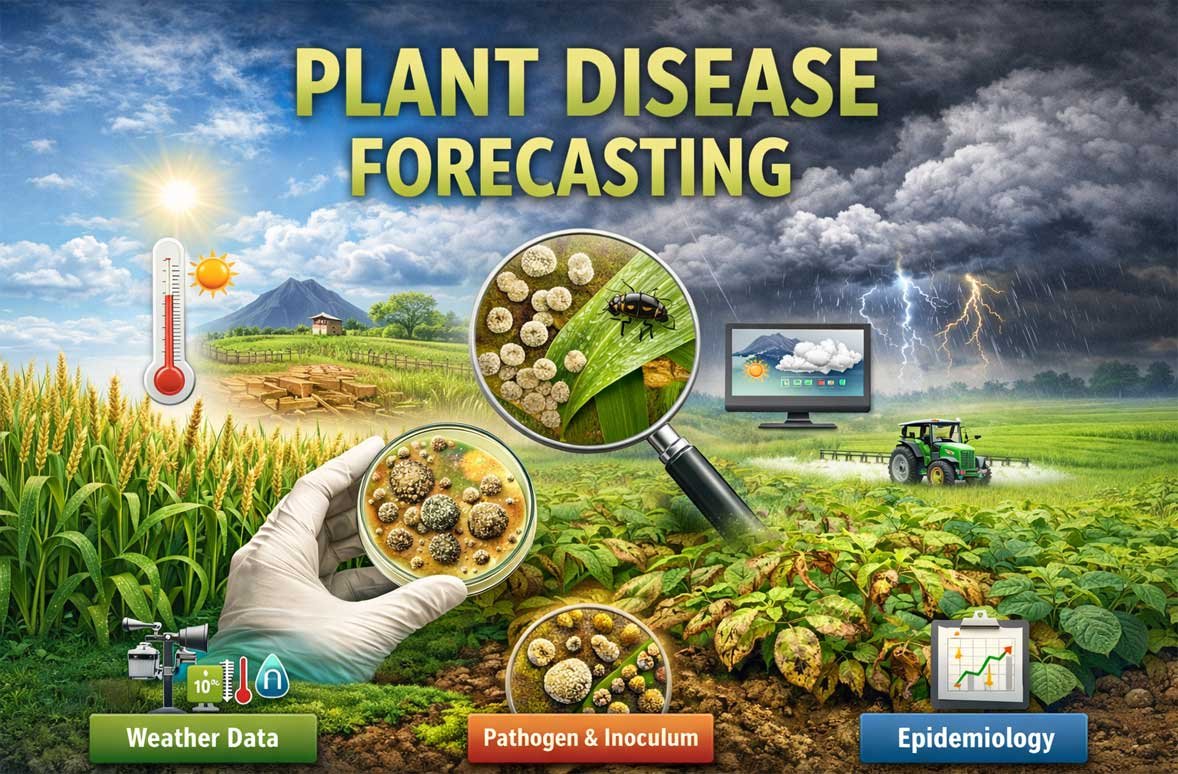
Plant disease forecasting comprises all activities involved in assessing and informing farmers when environmental conditions become sufficiently favorable for the development of specific plant diseases. It helps determine whether the application of control measures will provide economic benefit or whether the expected disease level is too low to justify the cost of management.
Plant disease forecasting is essentially applied epidemiology. It requires a complete understanding of disease development within plant populations under the influence of host, pathogen, and environmental factors. Forecasting becomes more reliable when the reasons behind disease development under particular conditions are clearly understood.
Experimental investigations are necessary to identify the critical stages in disease development that influence variation in disease incidence and intensity. A timely and dependable forecast provides farmers with multiple management options and allows them to evaluate risks, costs, and benefits before making decisions.
Botany Notes | Botany MCQs | Botany PPTs
Requirements for Plant Disease Forecasting
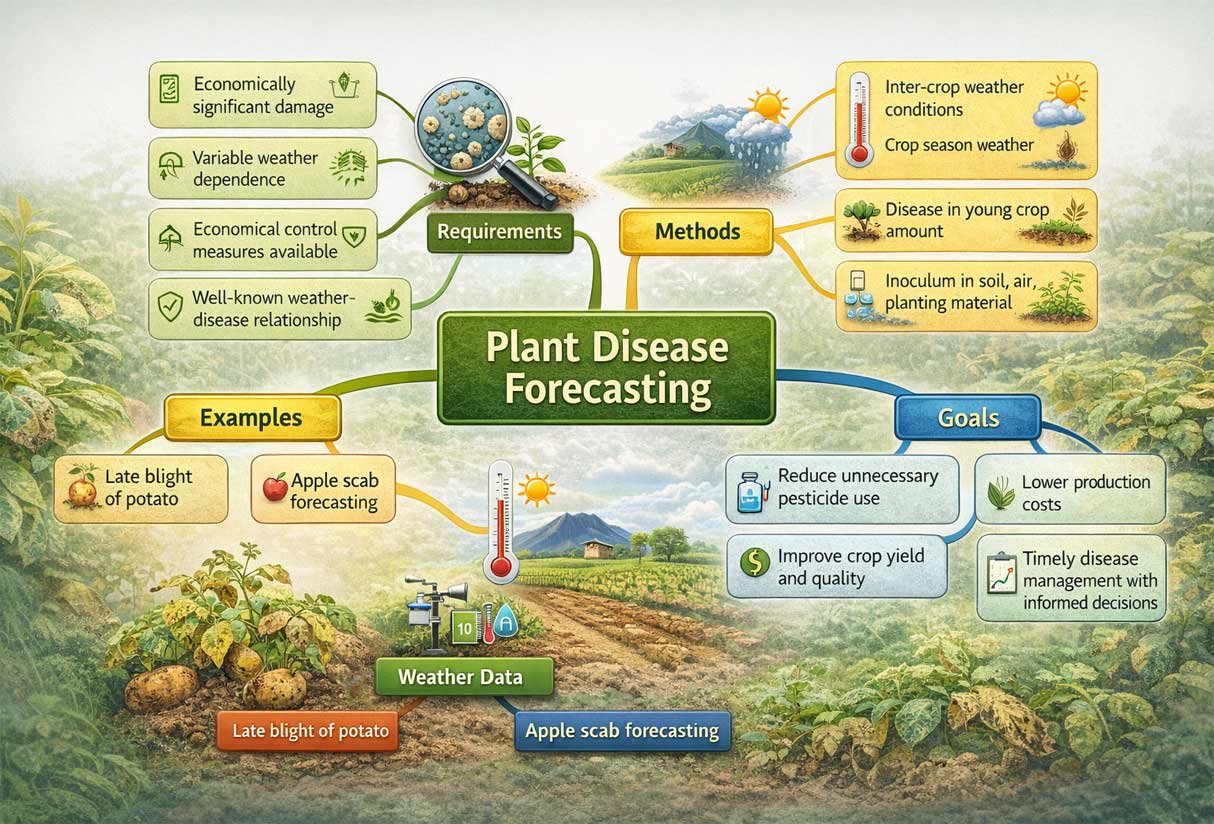
- The disease must cause economically significant losses in yield quantity or quality.
- The onset, rate of spread, and destructiveness of the disease should vary, mainly due to weather conditions.
- Effective control measures must be available and economically feasible.
- The relationship between weather conditions and disease development must be well established.
Methods of Plant Disease Forecasting
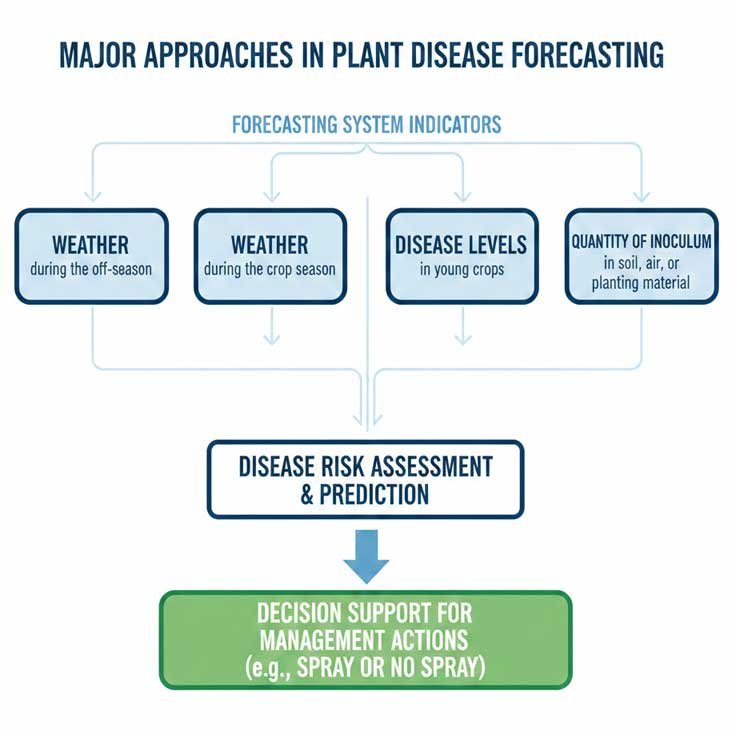
Plant disease forecasting is applied using different approaches based on:
- Weather conditions during the inter-crop period
- Weather conditions during the crop season
- Amount of disease present in young crops
- Amount of inoculum in soil, air, or planting material
Forecasting Based on Weather During Inter-Crop Period and Primary Inoculum
Weather during the inter-crop period greatly influences the survival of plant pathogens and their vectors, especially during winter. Severe cold temperatures may reduce pathogen survival, whereas mild winters permit higher survival rates and increase disease risk in the following season.
The bacterium Erwinia stewartii, responsible for Stewart’s wilt of corn, survives winter inside flea beetles, which act as vectors. Assessment of vector populations at the beginning of spring indicates survival levels. When the sum of mean temperatures for December, January, and February is below –1°C, most vectors die and serious disease is unlikely. Mild winters, however, favor vector survival and severe outbreaks.
You may also like NOTES in... BOTANY BIOCHEMISTRY MOL. BIOLOGY ZOOLOGY MICROBIOLOGY BIOSTATISTICS ECOLOGY IMMUNOLOGY BIOTECHNOLOGY GENETICS EMBRYOLOGY PHYSIOLOGY EVOLUTION BIOPHYSICS BIOINFORMATICS
Similarly, the severity of curly top disease of sugar beet is associated with the number of vectors that survive winter.
In California, fire blight of apple and pear caused by Erwinia amylovora becomes severe when daily average temperatures exceed a defined disease prediction line between early March and May. At temperatures below 15°C, the pathogen multiplies slowly and initial inoculum remains insufficient for severe infection.
Many fungal pathogens affecting temperate crops survive winter by forming resistant structures. Forecasters assess these structures to estimate disease potential in the coming season.
Soil-borne pathogens such as Verticillium, Sclerotium, and cyst nematodes like Heterodera and Globodera survive as resting structures. Greater numbers of sclerotia or cysts generally indicate higher disease severity.
Forecasting Based on Weather During Crop Season and Secondary Inoculum
Temperature and moisture levels during the growing season are critical for the development and spread of airborne diseases. Severe outbreaks occur when specific combinations of temperature and humidity persist for sufficient periods.
Leaf spot diseases such as tikka disease of groundnut, turcicum blight of corn, apple scab, and paddy blast can be predicted by monitoring spore counts along with temperature and relative humidity over time.
Forecasting Based on Disease in Young Crops
The level of disease observed in young crops can indicate the likelihood of severe development later. For example, leaf rust of wheat often originates from overwintering infections. Infection levels at the onset of spring frequently determine disease progression under favorable weather conditions.
Forecasting Based on Inoculum in Soil, Planting Material, and Air
Primary inoculum often originates from infected crop residues left in the field. Overwintering pathogens produce spores at the start of the growing season, initiating primary infections.
In seed-borne diseases, laboratory testing helps determine the level of infection. Based on results, seeds may be rejected or treated chemically or thermally.
Soil-borne pathogens survive as hyphae or resting structures such as sclerotia, chlamydospores, and stromata. If inoculum levels exceed certain thresholds, susceptible varieties should not be cultivated. Blight and root rot caused by Sclerotium rolfsii are typical examples.
Successful Examples of Plant Disease Forecasting
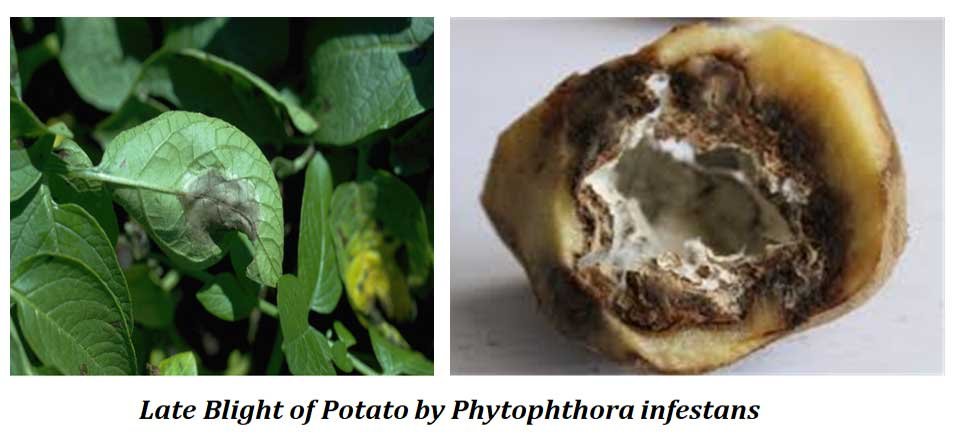
Late Blight of Potato
The Netherlands pioneered forecasting systems for late blight of potato. Van Everdingen (1926) developed four weather-based rules involving dew, temperature, cloudiness, and rainfall conditions. When these criteria were satisfied, blight was expected within seven days and immediate control measures were recommended.
Beaumont and Hodson later added a fifth rule related to relative humidity. Staniland simplified these rules into the Beaumont period, and Smith further refined them into the Smith period based on stricter humidity and temperature thresholds.
In the United States, Krause and colleagues developed BLITECAST, a computer-based forecasting system using temperature, humidity, and rainfall data. Later modifications incorporated cultivar resistance and fungicide selection to improve accuracy.
In India, fungicide application is recommended when temperatures are below normal and relative humidity approaches saturation.
Apple Scab Forecasting
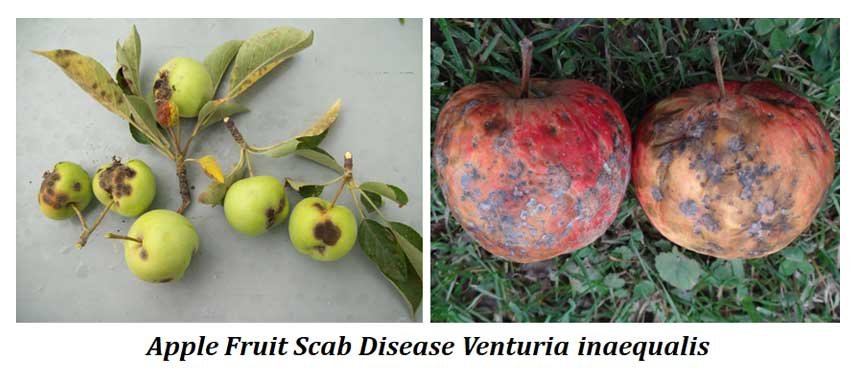
Apple scab caused by Venturia inaequalis survives winter in pseudothecia within infected leaf litter. In spring, ascospores are discharged over several weeks and act as primary inoculum.
Mills and La Plante developed a chart correlating temperature and leaf wetness duration to infection severity. Specific combinations of temperature and wetness hours predict light, moderate, or severe infection and estimate incubation periods.
Later systems replaced leaf wetness duration with relative humidity thresholds. Computer-based predictors developed by later researchers improved precision and enabled need-based fungicide application.
Apple Scab Forecasting in Himachal Pradesh
Following severe apple scab outbreaks in the late 1970s, monitoring and research laboratories were established in several districts of Himachal Pradesh. Instruments such as leaf wetness recorders and apple scab predictors were used to monitor infection periods.
When favorable conditions were detected, alerts were issued through sirens, radio broadcasts, and personal communication. The Reuter Stokes predictor proved highly efficient in forecasting infection periods. Based on predictions, fungicides with curative, preventive, or eradicative properties were recommended appropriately.
Multiple Choice Questions (MCQs)
1. Plant disease forecasting is mainly based on the study of:
A) Genetics
B) Epidemiology
C) Soil chemistry
D) Irrigation management
Answer: B – Epidemiology
2. Mild winters generally lead to:
A) Reduced pathogen survival
B) Increased vector survival
C) Soil sterilization
D) Lower humidity
Answer: B – Survival
3. Late blight of potato is caused by:
A) Fusarium
B) Alternaria
C) Phytophthora infestans
D) Rhizoctonia
Answer: C – Oomycete
4. Apple scab infection depends largely on:
A) Soil pH
B) Leaf wetness
C) Fertilizer dose
D) Seed size
Answer: B – Moisture
5. BLITECAST is used for forecasting:
A) Wheat rust
B) Rice blast
C) Potato late blight
D) Sugarcane smut
Answer: C – Potato
6. Soil-borne pathogens often survive as:
A) Spores only
B) Resting structures
C) Leaves
D) Roots
Answer: B – Dormancy
7. The main goal of plant disease forecasting is to:
A) Increase irrigation
B) Reduce pesticide use
C) Change crop variety
D) Improve soil fertility
Answer: B – Efficiency
Study Offline!!! Download this Note in PDF
You may also like... NOTES QUESTION BANK COMPETITIVE EXAMS. PPTs UNIVERSITY EXAMS DIFFERENCE BETWEEN.. MCQs PLUS ONE BIOLOGY NEWS & JOBS MOCK TESTS PLUS TWO BIOLOGY PRACTICAL