classification of amino acids ppt

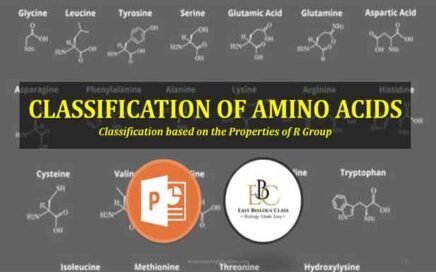
Classification of Amino Acids PPT

Amino acids are classified based on the properties of their R groups, which influence their behavior in proteins. The main categories include nonpolar (hydrophobic) amino acids like valine and leucine, which repel water and are usually found in the protein core. Polar uncharged amino acids, such as serine and threonine, […]
Continue Reading
structure of amino acids ppt

Structure of Amino Acids PPT

Structure of Amino Acids PPT: Amino acids are organic compounds that serve as the building blocks of proteins. Each amino acid has a central carbon atom (alpha carbon) bonded to four groups: an amino group (-NH₂), a carboxyl group (-COOH), a hydrogen atom, and a unique side chain (R group) […]

Continue Reading

Chargaff’s Rule Questions and Answers

Chargaff Rule Questions: Chargaff’s rule, proposed by Erwin Chargaff in the 1950s, is a fundamental principle in molecular biology that describes the base composition of DNA. The rule has two main components: Base Pairing Equality: In a double-stranded DNA molecule, the amount of adenine (A) is equal to the amount […]

Continue Reading

MCQ on Uses of Reverse Transcriptase PCR (RT-PCR)

Reverse Transcriptase PCR (RT-PCR) is a powerful molecular biology tool with extensive applications in research, diagnostics, and biotechnology. It is widely used for detecting and quantifying RNA viruses, studying gene expression, and analyzing RNA splicing. RT-PCR plays a critical role in diagnosing infectious diseases, such as COVID-19, HIV, and influenza. […]

Continue Reading
MCQ on RT PCR

MCQ on RT PCR with Answers

Reverse Transcription Polymerase Chain Reaction (RT-PCR) is a molecular biology technique used to detect and quantify RNA. It involves reverse transcription of RNA into complementary DNA (cDNA) by reverse transcriptase, followed by amplification using PCR. RT-PCR is highly sensitive and specific, allowing the analysis of gene expression, detection of RNA […]

Continue Reading