mcq on hardy weinberg equilibrium

MCQ on Hardy Weinberg Equilibrium with Answers (PDF)

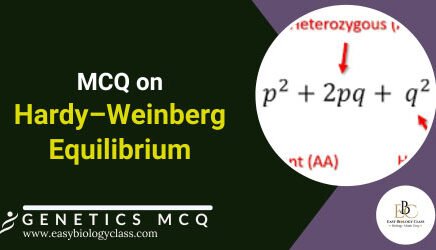
Hardy-Weinberg equilibrium is a principle that describes the genetic composition of a population when allele and genotype frequencies remain constant from generation to generation, provided that certain conditions such as random mating, no selection, no mutation, large population size, and no gene flow are met. It serves as a null […]
Continue Reading
mcq on gene mutation

MCQ on Gene Mutation with Answers (PDF)

Gene Mutation refers to a permanent alteration in the DNA sequence that makes up a gene. Mutations can occur due to various factors, including environmental influences, errors during DNA replication, or the action of mutagens. They can lead to changes in the protein produced by the gene, potentially affecting an […]

Continue Reading
mcq on epistasis

MCQ on Epistasis with Answers (PDF)

Epistasis is the phenomenon where the expression of one gene is affected by one or more other genes. This interaction can modify or completely mask the phenotypic effects of alleles at another locus. Epistasis is a key aspect of genetic regulation and plays a role in complex traits and disease […]

Continue Reading
Question Post Translational Modification

MCQ Questions on Prost Translational Modification with Answers (PDF)

Post-translational modifications are chemical changes made to proteins after translation, which affect their function, stability, and localization. These modifications include processes such as phosphorylation, glycosylation, acetylation, and ubiquitination. They can activate or deactivate enzymes, alter protein interactions, or target proteins for degradation. Such modifications are crucial for regulating protein activity, […]

Continue Reading
Questions on Post Transcriptional Modification

Questions on Post Transcriptional Modification with Answers (PDF)

Post-transcriptional modifications are processes that modify pre-mRNA into mature mRNA after transcription in eukaryotic cells. These modifications include the addition of a 5′ cap, splicing to remove introns, and the addition of a poly-A tail at the 3′ end. These changes protect mRNA from degradation, aid in its export from […]

Continue Reading