
Bioaugmentation Process Explained for Students
Bioaugmentation process is an important concept in environmental biotechnology. It helps in removing pollutants using microorganisms. In this method, selected microbes are added to contaminated environments to speed up degradation. Therefore, it improves the efficiency of natural cleanup processes. This technique is widely used in soil, water, and wastewater treatment. You can easily download this note as a PDF using the link provided just below the post for quick access and offline reading.
Bioaugmentation process is the intentional addition of specific microorganisms into contaminated environments. These microbes are selected for their ability to degrade pollutants. As a result, harmful substances are converted into simpler and less toxic products such as carbon dioxide, water, and biomass.
Bioaugmentation Process and Its Purpose
The bioaugmentation process is used when native microorganisms are not effective. Sometimes, they are too few in number. In other cases, they lack the required metabolic pathways.
Therefore, scientists introduce specialized microbes to improve degradation. These microbes have specific enzymes that can break down complex pollutants. As a result, the cleanup process becomes faster and more efficient.
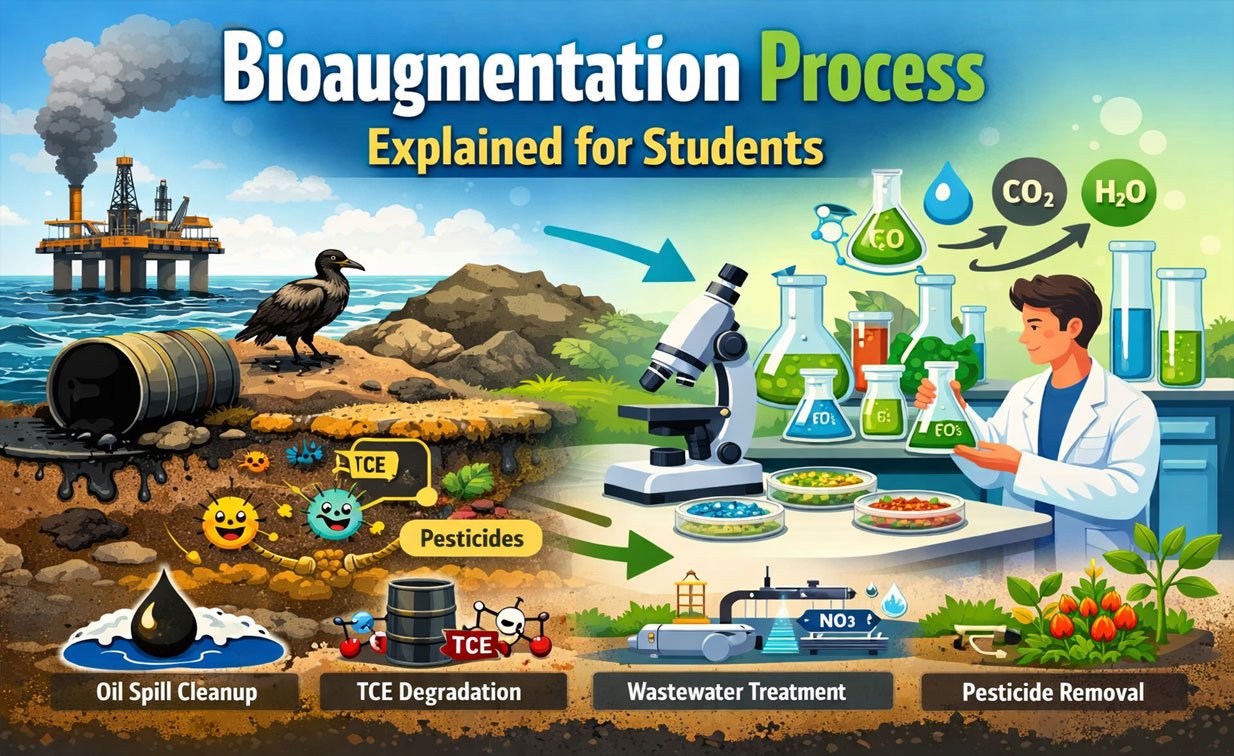
Mechanism of Bioaugmentation Process
The bioaugmentation process follows several organized steps. Each step plays an important role.
Selection of Microorganisms
First, scientists identify microbes with pollutant-degrading ability. These microbes are isolated carefully.
Laboratory Cultivation
Next, the selected microbes are grown under controlled conditions. This increases their population.
Introduction into Contaminated Sites
After cultivation, the microbes are introduced into polluted environments. These may include soil, groundwater, or wastewater systems.
Pollutant Degradation
Finally, microbes use pollutants as a food source. Through enzymatic reactions, toxic compounds are broken down into harmless products.
Thus, the bioaugmentation process enhances natural biodegradation.
You may also like NOTES in... BOTANY BIOCHEMISTRY MOL. BIOLOGY ZOOLOGY MICROBIOLOGY BIOSTATISTICS ECOLOGY IMMUNOLOGY BIOTECHNOLOGY GENETICS EMBRYOLOGY PHYSIOLOGY EVOLUTION BIOPHYSICS BIOINFORMATICS
Applications of Bioaugmentation Process
Oil Spill Remediation
For example, hydrocarbon-degrading bacteria are used during oil spills. These bacteria break down petroleum compounds and reduce pollution.
Chlorinated Solvent Degradation
In groundwater contamination, bacteria such as Pseudomonas species are introduced. They help degrade harmful chemicals like TCE.
Wastewater Treatment Plants
In addition, nitrifying bacteria are added to wastewater systems. They convert ammonia into nitrate, which reduces toxicity.
Pesticide-Contaminated Soils
Similarly, microbes that degrade pesticides are added to soil. This helps detoxify harmful agricultural chemicals.
Advantages of Bioaugmentation Process
- Faster degradation: Pollutants are broken down quickly.
- Targeted action: Specific microbes act on specific contaminants.
- Effective in high pollution: Works well in heavily contaminated sites.
- Eco-friendly: Produces non-toxic end products.
Limitations of Bioaugmentation Process
- Survival issues: Introduced microbes may not survive in new environments.
- Competition: Native microbes may outcompete added microbes.
- Ecological imbalance: It may disturb natural microbial communities.
- Adaptation delay: Microbes may take time to adjust.
Conclusion
The bioaugmentation process is a valuable tool in environmental biotechnology. It improves pollutant degradation by adding specialized microorganisms. However, its success depends on environmental conditions and microbial survival. Therefore, understanding the bioaugmentation process helps students learn sustainable methods of pollution control.
FAQs on Bioaugmentation
1. What is the difference between bioaugmentation and biostimulation?
Bioaugmentation adds external microbes. In contrast, biostimulation improves native microbial activity using nutrients or environmental changes.
2. Why do introduced microbes fail sometimes?
They may fail due to unsuitable conditions like pH or temperature. In addition, native microbes may compete with them.
3. Is bioaugmentation safe?
Yes, it is generally safe and eco-friendly. However, careful monitoring is required to avoid ecological imbalance.
<<< Back to Microbiology Notes Page
You may also like... NOTES QUESTION BANK COMPETITIVE EXAMS. PPTs UNIVERSITY EXAMS DIFFERENCE BETWEEN.. MCQs PLUS ONE BIOLOGY NEWS & JOBS MOCK TESTS PLUS TWO BIOLOGY PRACTICAL
Study Offline!! Download this Note as a PDF
🌿 Dear Readers,
I hope you found this article helpful and easy to understand. If you have any questions, suggestions, or thoughts, I would truly love to hear from you.
Please share your feedback in the comments below. Your participation helps make EasyBiologyClass a better learning space for everyone.
Best regards,
EasyBiologyClass