
Introduction Microbiology: History, Discovery & Concepts
The Introduction Microbiology explains the study of microscopic living organisms and their importance in human health and disease. Microbiology helps scientists understand infections, disease transmission, and methods for treatment and prevention. In early times, people did not know that microorganisms existed. Therefore, diseases were often believed to be caused by supernatural forces. However, scientific discoveries gradually proved that microscopic organisms are responsible for many infections. Today, microbiology forms the foundation of modern medical science. You can easily download this note as a PDF using the link provided just below the post for quick access and offline reading.
Definition of Microbiology
Microbiology is the scientific study of microorganisms such as bacteria, viruses, fungi, and protozoa. In medical science, microbiology mainly focuses on microbes that cause disease in humans. It also studies infection mechanisms, host responses, diagnosis, treatment, and prevention methods.
Introduction Microbiology and Medical Microbiology
Microbiology is a broad scientific field. However, medical microbiology specifically studies microorganisms that cause diseases in humans.
Important areas of medical microbiology include:
- Identification of infectious agents
- Understanding how microbes cause disease
- Studying the immune response of the host
- Developing diagnostic and treatment methods
The term microbe was first introduced by Sedillot in 1878. Today, scientists more commonly use the word microorganisms.
Early Beliefs About Disease
Before the discovery of microbes, many societies believed diseases were caused by supernatural forces.
Ancient Supernatural Beliefs
In ancient times, epidemics and widespread diseases were believed to be punishments from gods. As a result, people performed rituals, sacrifices, and purification ceremonies in an attempt to stop disease outbreaks.
However, these beliefs had no scientific basis and were mainly cultural explanations for illnesses.
Development of the Concept of Contagion
Over time, people observed that certain diseases spread from one person to another.
Early Observations of Disease Spread
The idea that diseases spread through direct or indirect contact became known as contagion. Early laws described in religious texts attempted to prevent the spread of diseases such as leprosy.
Therefore, even before microbes were discovered, people had begun to recognize patterns of disease transmission.
Early Theories of Invisible Disease Agents
Several early scholars proposed that invisible organisms might cause diseases.
- Varro (2nd century BC) suggested invisible creatures in the air could cause diseases.
- Roger Bacon (13th century) proposed that microscopic living organisms might produce infections.
- Girolamo Fracastorius (1546) described disease-causing particles called “seeds” or seminaria.
- von Plenciz (1762) suggested that each disease is caused by a specific organism.
Although these ideas were theoretical, they influenced the later development of microbiology.
Discovery of Microorganisms
Scientists suspected the existence of microbes long before they were actually seen. However, direct observation only became possible after the invention of microscopes.
First Observation of Microorganisms
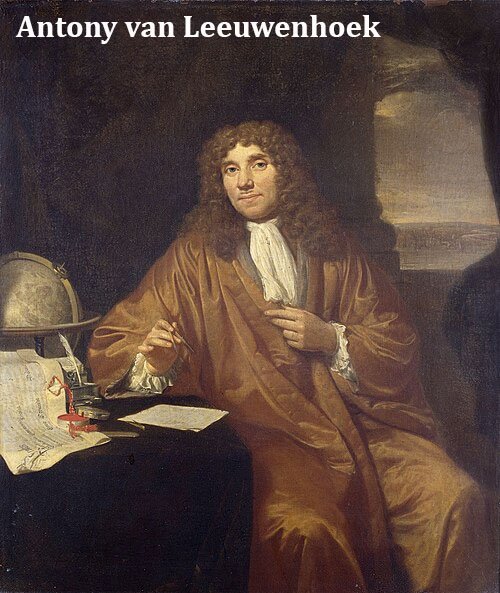
Antony van Leeuwenhoek (1632–1723) was the first person to observe microorganisms. He was a Dutch tradesman who developed an interest in grinding lenses and building microscopes.
In 1673, he observed tiny living organisms in water, mud, saliva, and intestinal material. He called these organisms animalcules.
Contributions of Antony van Leeuwenhoek
1. Development of a Simple Microscope
Leeuwenhoek constructed microscopes using a single biconvex lens capable of magnifying objects up to about 200 times.
2. First Observation of Microorganisms
Using his microscope, he became the first scientist to directly observe microorganisms.
3. Description of Bacterial Shapes
In 1683, he accurately described different bacterial shapes:
- Cocci – spherical bacteria
- Bacilli – rod-shaped bacteria
- Spirochetes – spiral-shaped bacteria
He communicated these observations to the Royal Society of London.
Spontaneous Generation Theory
For many centuries, people believed in the theory of spontaneous generation.
What Was Spontaneous Generation?
This theory suggested that living organisms could develop from non-living matter. For example, people believed worms or insects could arise from decaying meat. Even the philosopher Aristotle supported this belief.
Experiments Challenging Spontaneous Generation
Francesco Redi’s Experiment
The Italian physician Francesco Redi conducted an experiment using jars containing meat. Some jars were covered with gauze while others were left open.
Maggots appeared only in open jars where flies could reach the meat. Therefore, Redi proved that maggots came from fly eggs rather than from the meat itself.

Continued Debate on Microbial Spontaneous Generation
Although Redi disproved spontaneous generation for larger organisms, some scientists believed microorganisms could still appear spontaneously.
- John Needham (1745) claimed microbes appeared in boiled broth.
- Felix Pouchet (1859) argued that microorganisms could grow without air contamination.
These claims created a scientific debate.
Louis Pasteur and the End of Spontaneous Generation
Pasteur’s Swan-Neck Flask Experiment
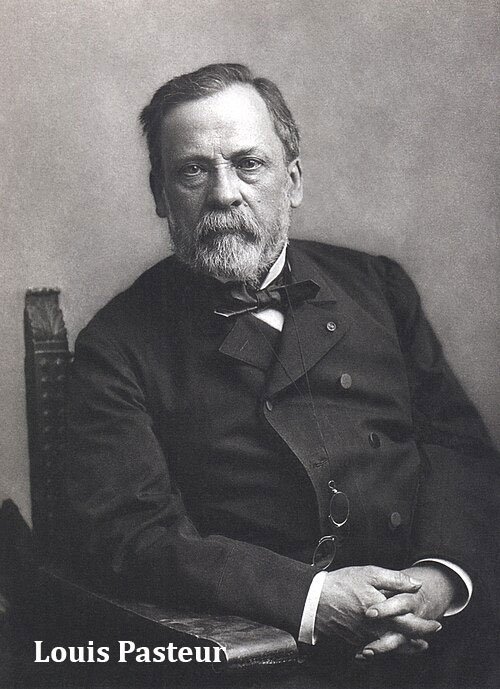
Louis Pasteur performed an experiment using flasks with long curved necks. Air could enter the flask, but dust and microbes were trapped in the neck.
Boiled broth inside the flask remained sterile. However, when the neck was broken, microorganisms quickly grew in the broth.
This experiment proved that microbes arise from existing microorganisms rather than from non-living matter.
Tyndallization and Heat-Resistant Microbes
John Tyndall later discovered that some bacteria could survive heat because they form resistant structures.
Tyndallization Method
Tyndallization is a process of repeated heating used to destroy bacteria and their resistant forms. This method helped explain why earlier sterilization experiments sometimes failed.
Discovery of Bacterial Spores
Ferdinand Cohn later discovered bacterial spores. These spores are highly resistant structures that allow bacteria to survive harsh environmental conditions such as heat and dryness.
This discovery explained why some microorganisms could survive simple heating methods.
Conclusion
The Introduction Microbiology explains how scientific understanding of microbes developed over centuries. Early societies believed diseases had supernatural causes. However, scientists gradually discovered that microorganisms cause infections. Important contributions from Leeuwenhoek, Pasteur, and Tyndall helped establish microbiology as a scientific discipline and laid the foundation for modern medicine.
Frequently Asked Questions (FAQs)
What is microbiology?
Microbiology is the scientific study of microscopic organisms such as bacteria, viruses, fungi, and protozoa. These organisms are too small to be seen without a microscope. Microbiology helps scientists understand infections, disease transmission, and the role of microbes in health and the environment.
What is medical microbiology?
Medical microbiology is a branch of microbiology that focuses on microorganisms that cause diseases in humans. It studies infection processes, immune responses, diagnostic techniques, treatment methods, and strategies to prevent infectious diseases.
Who first discovered microorganisms?
Microorganisms were first observed by Antony van Leeuwenhoek in 1673. Using a microscope that he designed himself, he examined water and biological materials and discovered tiny living organisms that he called animalcules.
What is the theory of spontaneous generation?
The theory of spontaneous generation suggested that living organisms could arise from non-living matter. For example, people believed insects could develop from decaying food. This belief existed for centuries before scientific experiments disproved it.
You may also like NOTES in... BOTANY BIOCHEMISTRY MOL. BIOLOGY ZOOLOGY MICROBIOLOGY BIOSTATISTICS ECOLOGY IMMUNOLOGY BIOTECHNOLOGY GENETICS EMBRYOLOGY PHYSIOLOGY EVOLUTION BIOPHYSICS BIOINFORMATICS
Who disproved spontaneous generation?
Louis Pasteur disproved spontaneous generation through his swan-neck flask experiment. His research demonstrated that microorganisms originate from existing microbes present in the air rather than forming spontaneously.
What is contagion in microbiology?
Contagion refers to the spread of disease from one individual to another through direct contact or indirect exposure. This concept was recognized long before microorganisms were discovered and later confirmed by scientific research.
What are bacterial spores?
Bacterial spores are highly resistant structures produced by certain bacteria to survive harsh environmental conditions such as heat, dryness, and lack of nutrients. When favorable conditions return, spores can develop into active bacterial cells.
What is tyndallization?
Tyndallization is a sterilization technique developed by John Tyndall. It involves repeated heating of materials to destroy both active bacteria and heat-resistant spores that may survive initial heating.
<<< Back to Microbiology Notes Page
You may also like... NOTES QUESTION BANK COMPETITIVE EXAMS. PPTs UNIVERSITY EXAMS DIFFERENCE BETWEEN.. MCQs PLUS ONE BIOLOGY NEWS & JOBS MOCK TESTS PLUS TWO BIOLOGY PRACTICAL
Study Offline!! Download this Notes as a PDF
🌿 Dear Readers,
I hope you found this article helpful and easy to understand. If you have any questions, suggestions, or thoughts, I would truly love to hear from you.
Please share your feedback in the comments below. Your participation helps make EasyBiologyClass a better learning space for everyone.
Best regards,
EasyBiologyClass